
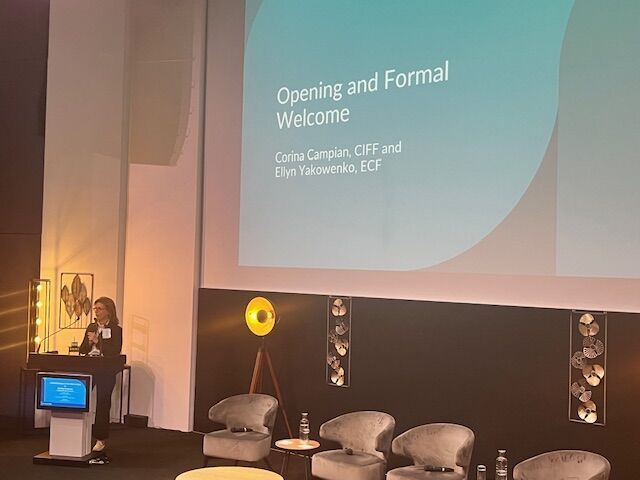
Last week, partners from across the global malnutrition community gathered for the 2025 Global Dialogue on Cost Optimization in Wasting Treatment. The event, convened by the World Health Organization and Action Against Hunger through the support of the Eleanor Crook Foundation, brought together practitioners, researchers, governments, UN agencies, and donors to explore an urgent question facing our field: how do we best utilize increasingly scarce resources to protect access to lifesaving treatment for children with wasting?
This conversation comes at a pivotal moment. Over the past decade, financing for child wasting grew by roughly 15%, driving a notable decline in the number of children suffering from wasting - from 52 million in 2016 to 42.8 million by 2024. But widespread funding cuts across institutional donors in 2025 threaten to reverse decades of momentum. As resources contract, treatment programs in many humanitarian contexts are at-risk of or are already closing, and countries are being forced to make difficult choices about what they can sustain and where.
Cost optimization, which has long been a background topic, has now become a central requirement for navigating the years ahead. It was against this backdrop that the Global Dialogue opened with a central question: what do we really mean by cost “optimization”?
For some, optimization implies cost savings — i.e. ‘doing more with less’ — whereas for others, it signals a need for better targeting or clearer prioritization. But behind all of these interpretations lie deeper questions about whose costs are being counted, which costs matter the most, who gets to make these decisions, and who benefits or bears the consequences.
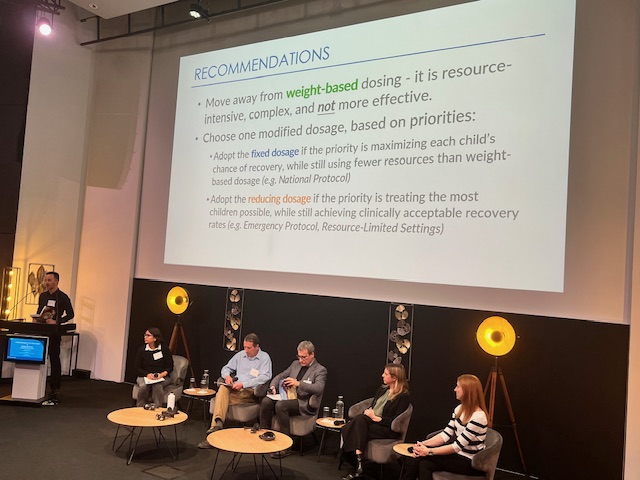
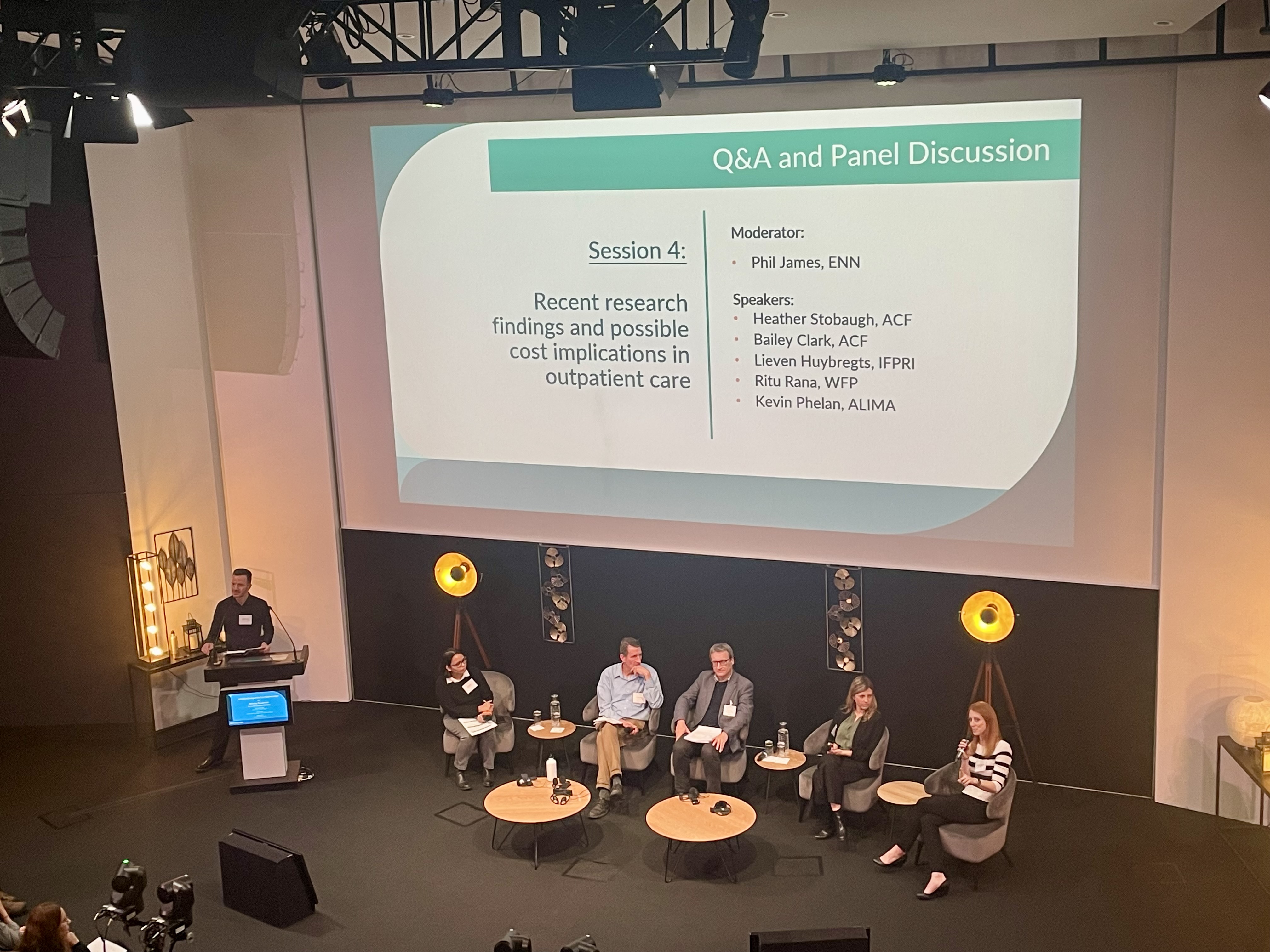
Over the course of the day, we explored how countries considered costs and cost implications when updating their national wasting guidelines, how programs are adapting to rapidly changing circumstances, and how cutting edge research for both inpatient and outpatient treatment of wasting might pave the way for a more cost-effective response in the future. The discussions reinforced three key points.
1. Cost optimization is more than cost “cutting” alone.
Optimizing costs requires understanding the full landscape of treatment costs — from commodity and program costs, to the time, effort and opportunity costs borne by caregivers, health workers and communities. Only with this holistic view can we identify where costs can be reduced responsibly and where investments must be protected — or even increased — to save lives and sustain outcomes.
Not all costs carry the same consequence. For example, the fact that wasting treatment can be provided more cheaply in certain contexts does not negate its necessity in other comparatively more expensive geographies. If the primary goal is to save lives, cost optimization may be more about prioritizing resources to contexts where the risk of mortality is highest, which often but not exclusively tend to be those where the cost of delivery is highest.
Similarly, reducing costs in one part of the system can increase costs in other areas. For example, shifting the burden of effort to caregivers or health extension workers may reduce facility-based costs but displace those costs to those less able to absorb them. If the primary goal is to expand access to treatment services, cost optimization may therefore be more about improving system alignment - ensuring that delivery expectations align with actual system capacity and that resources reinforce rather than fragment wasting-related services - so as to reach more children without eroding quality.
2. There is a real tension between optimizing for individuals and optimizing for systems.
Approaches that reflect the ideal standard of care for an individual child are not always feasible for national systems operating under budget constraints, workforce shortages, and competing priorities. Conversely, systems-focused approaches structured around scalability and integration can often introduce compromises in frequency, supervision, or follow-up of wasted children.
Countries updating and rolling out revised national wasting guidelines in 2025 have had to confront these realities directly — adapting global WHO guidelines designed with a focus on the individual child into a system that must balance clinical ambition within the practical limits of available staff, budgets, supply chains, and health system capacity. This tension is not new, but it is more pronounced as financial pressures intensify. This global dialogue underscored the importance of understanding how countries are and will continue to navigate these trade-offs over the coming years.
3. The context has changed and our thinking must evolve with it.
The policies, delivery models, and procurement assumptions guiding today’s practice were created under very different global conditions. The landscape of 2026 and beyond will demand a more explicit orientation to costs and their implications to sustain coverage and support countries in navigating future shocks. The goal of this dialogue was not simply to share new evidence, but rather to spark an honest conversation about what we do next. ECF supported this event with a clear intention to strengthen collective thinking on cost-effectiveness, so as to create the conditions for more grounded, practical decision-making as countries work to determine what is feasible, what must be protected, and where adaptation is necessary in the years ahead.
A dedicated summary of the Dialogue’s discussions and takeaways will be shared once synthesis is complete. For now, we are grateful to the many partners who joined the conversation—online and in person—and who continue working tirelessly to protect children’s access to lifesaving care in a time of unprecedented constraints.


